This is why you have a bad reputation for food. How does it have so many good reviews? The continental part of my blood is curdling.
Showing posts with label british. Show all posts
9.7.10
Um, ew.
Dear British people of the world:
This is why you have a bad reputation for food. How does it have so many good reviews? The continental part of my blood is curdling.
1.2.10
War Reporting for Cowards
It's hard to imagine less than two weeks of actual war reporting being stretched into a whole book, but Ayres does it quite well, and I only rarely begrudged him my $12 in exchange for a memoir so light on the experience actually, you know, billed in the title. I found myself laughing out loud on the Metro, which is always a good sign for a book.
What's more, I never felt like Ayres was dogmatic in any way. This isn't an anti-war book. It's an anti-Ayres-being-at-the-war book. And it's not a dry political/military history book -- he doesn't spend much time discussing the overall politics and war strategy of the Iraq war (is it too soon for that?)
Best of all, Ayres appears to have real respect for the others who seem so alien to him, especially the Marines with whom he lived for a short time. Ayres says in the acknowledgments, "My own experiences in Iraq are trivial compared with those of the Marines; but warriors are rarely writers (when they are, they win Pulitzers), and I hope that my memoir helps readers understand what these men's daily lives are like." That it did.
(As an added bonus, Ayres' account of his experiences in NYC on 9/11 and the days shortly thereafter exhibit an insight into the emotions of those weeks better than anything I've read in a long time. I found myself contemplating my own perspective of those anthrax-and-terrorist-filled days much more deeply than I have in the last 5-7 years. A beautifully heart-wrenching chapter.)
7.5.09
More Unusually Smart David Mitchell
For your procrastinating pleasure:
Peep Show is now on Hulu. More David Mitchell greatness. Plus that other guy who hangs around him. :)
2.5.09
Unusually Smart David Mitchell
I absolutely love David Mitchell -- something about smart British funny guys I guess. Anyway, I found this to be particularly topical given the number of end-of-year black tie events I've had to go to recently. Geez, guys have it easy. The dress code is even named after how easy it is for them.
4.12.08
Wallace and Gromit Are Back
So very excited that the boys are back. Official site and less official video
17.8.08
Wallace and Gromit!!
I love Wallace and Gromit for several reasons:
And so I'm super happy with Hulu right now for adding Cracking Contraptions to their lineup. Now if only they could get A Close Shave. . . .
- The patience involved in claymation always amazes me.
- Cheese!!
- Rube Goldberg devices in all their delightful frivolity
And so I'm super happy with Hulu right now for adding Cracking Contraptions to their lineup. Now if only they could get A Close Shave. . . .
26.3.08
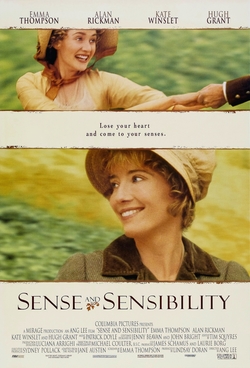
Sense and Sensibility
In honor of my friends who are having a Jane Austen marathon as I post this:
With unfortunate frequency I find myself frustrated at the lack of new movies. I don’t mean there aren’t new releases every week, but rather that they seem to be simple repackaging of the same stories over and over. Now, I know that there are only 36 situations in stories , but at least the story should look new at first gloss, right? Instead, I seem to see constant remakes and sequels of older movies, comic books, novels, even biographies – all of which were better the first time around. Just think of the big movies of summer 2007: Spiderman 3 (a sequel of a comic book adaptation); 28 Weeks Later (sequel); Shrek the Third (sequel of a pop culture/fairy tale mashup); Pirates of the Caribbean, At World’s End (sequel); Ocean’s Thirteen (sequel of a remake). We got another Die Hard movie, and another Harry Potter adaptation. Hairspray was a movie version of a stage production. Even the Simpsons movie was basically just a full-length version of a 22-minute regular episode. Of course, there were a couple new movies (like the brilliant Ratatouille), but adaptations and sequels seem to have taken over the big screen.
I understand the business reasoning behind such endeavors – it takes less work to get people to come to a movie they already know. I mean, Harry Potter movies practically sell themselves just by the title. Even ostensibly new movies get sold as “from the makers of . . .” and even Ratatouille got billed by its connections to prior successes with the Pixar label.
But every once in a long while a beautiful adaptation comes along, making me succumb to old stories. Surprisingly enough, three of my favorite adaptations come from Jane Austen: Clueless (an adaptation of Emma), Pride and Prejudice (not the A&E version, the Keira Knightly version, believe it or not), and the 1995 Sense and Sensibility, adapted by Emma Thompson. My plea to the writers of the many many adaptations to come, if producers remain as risk-averse as they have been lately: learn from Ms. Thompson and Ang Lee, the director (yes, of Brokeback Mountain fame).
The key to a wonderful adaptation is to figure out the essence of the story without feeling burdened by it. A two hour movie is basically equivalent to a novella in length – you just aren’t going to be able to have the plot and character development of a full novel. Don’t even try. The only times it’s ever worked is the A&E Pride and Prejudice marathon and Ken Branagh’s endless uncut four-hour Hamlet. I must admit that though I love Jane Austen stories, the prose gets incredibly cumbersome, which is perhaps why adaptations of her work tend to fare relatively well. No movie is going to take twenty minutes analyzing the quality of the garden hedges, so let’s just cut that wholesale.
Second, feel free to add scenes, but only if you can understand the material enough to be seemless. Apparently, many people have written Emma Thompson or told her that they loved that she kept their favorite part of the book in the movie – a scene about the little girl Margaret being coaxed out of hiding by Elinor and Mr. Ferras pretending to not know any geography. But this scene isn’t in the book. It just fits so well that people thought it was.
Third, remember your medium! My favorite part about the movie is that it’s so clearly a movie. Ang Lee does amazing things with his shots, covering in seconds what takes pages and pages in a book. I’ve seen the movie many times, and every time give a little shudder of delight with the abrupt cutting between Elinor and Mr. Ferras when they are awkwardly talking in the stables. Those cuts make the scene hilarious in a way that even the best comedic adaptation couldn’t do on its own. Mr. Lee also uses the English landscape to set the tone of a scene in a way that would make Ms. Austen proud – one scene, for example, brilliantly uses a long interior shot allows the audience to see the wind rustling the cloaks by the door to create a sense of expectation and foreboding.
Fourth, casting casting casting. The cast in Sense and Sensibility is basically perfect. Costume dramas are hard to cast, as the horrible miscasting of Keanu Reeves in another Emma Thompson movie makes clear. You have to get people who are comfortable with language, and who make sense for the parts. If there’s every a place to typecast, this is it, and Sense and Sensibility does so with a loveable but inept Hugh Grant as Mr. Ferras (does he ever play any other part) and Alan Rickman as the kind but brooding Colonel Brandon. Kate Winslet plays young and impetuous Marianne well, which probably was less playing and more just being a nineteen-year old who lied about her age to get the part. If the original source uses physical attributes to display character traits, by all means do so in your casting here, as the rotund and ridiculous Mrs. Jennings (played by Elizabeth Spriggs) and the haughty and pointy-nosed Fanny Dashwood (Harriet Walter) exhibit.
All in all, this adapation is everything an adaptation should be – great story that’s made into an equally great movie, with a brilliant cast (some of whom got their big breaks here) and a brilliant script and brilliant director. 4 stars.
I understand the business reasoning behind such endeavors – it takes less work to get people to come to a movie they already know. I mean, Harry Potter movies practically sell themselves just by the title. Even ostensibly new movies get sold as “from the makers of . . .” and even Ratatouille got billed by its connections to prior successes with the Pixar label.
But every once in a long while a beautiful adaptation comes along, making me succumb to old stories. Surprisingly enough, three of my favorite adaptations come from Jane Austen: Clueless (an adaptation of Emma), Pride and Prejudice (not the A&E version, the Keira Knightly version, believe it or not), and the 1995 Sense and Sensibility, adapted by Emma Thompson. My plea to the writers of the many many adaptations to come, if producers remain as risk-averse as they have been lately: learn from Ms. Thompson and Ang Lee, the director (yes, of Brokeback Mountain fame).
The key to a wonderful adaptation is to figure out the essence of the story without feeling burdened by it. A two hour movie is basically equivalent to a novella in length – you just aren’t going to be able to have the plot and character development of a full novel. Don’t even try. The only times it’s ever worked is the A&E Pride and Prejudice marathon and Ken Branagh’s endless uncut four-hour Hamlet. I must admit that though I love Jane Austen stories, the prose gets incredibly cumbersome, which is perhaps why adaptations of her work tend to fare relatively well. No movie is going to take twenty minutes analyzing the quality of the garden hedges, so let’s just cut that wholesale.
Second, feel free to add scenes, but only if you can understand the material enough to be seemless. Apparently, many people have written Emma Thompson or told her that they loved that she kept their favorite part of the book in the movie – a scene about the little girl Margaret being coaxed out of hiding by Elinor and Mr. Ferras pretending to not know any geography. But this scene isn’t in the book. It just fits so well that people thought it was.
Third, remember your medium! My favorite part about the movie is that it’s so clearly a movie. Ang Lee does amazing things with his shots, covering in seconds what takes pages and pages in a book. I’ve seen the movie many times, and every time give a little shudder of delight with the abrupt cutting between Elinor and Mr. Ferras when they are awkwardly talking in the stables. Those cuts make the scene hilarious in a way that even the best comedic adaptation couldn’t do on its own. Mr. Lee also uses the English landscape to set the tone of a scene in a way that would make Ms. Austen proud – one scene, for example, brilliantly uses a long interior shot allows the audience to see the wind rustling the cloaks by the door to create a sense of expectation and foreboding.
Fourth, casting casting casting. The cast in Sense and Sensibility is basically perfect. Costume dramas are hard to cast, as the horrible miscasting of Keanu Reeves in another Emma Thompson movie makes clear. You have to get people who are comfortable with language, and who make sense for the parts. If there’s every a place to typecast, this is it, and Sense and Sensibility does so with a loveable but inept Hugh Grant as Mr. Ferras (does he ever play any other part) and Alan Rickman as the kind but brooding Colonel Brandon. Kate Winslet plays young and impetuous Marianne well, which probably was less playing and more just being a nineteen-year old who lied about her age to get the part. If the original source uses physical attributes to display character traits, by all means do so in your casting here, as the rotund and ridiculous Mrs. Jennings (played by Elizabeth Spriggs) and the haughty and pointy-nosed Fanny Dashwood (Harriet Walter) exhibit.
All in all, this adapation is everything an adaptation should be – great story that’s made into an equally great movie, with a brilliant cast (some of whom got their big breaks here) and a brilliant script and brilliant director. 4 stars.
File under:
1995,
4 stars,
adaptation,
ang lee,
austen,
british,
comedy,
emma thompson,
hugh grant,
movie,
review,
romance
16.3.08
26.7.07
Keeping Mum
Keeping Mum follows a country vicar and his family, an archetype the British apparently find ripe for comedy. In the grand tradition of British Comedies about Vicars, the film is chock full of eccentric characters, and there are passing jokes about flower committees and country church politics, as well as making puns and other small lingual jokes that make you either love watching BBC sitcoms or not. (The town is called Little Wallop, for example, and the family portrayed is the Goodfellows.) What distinguishes this movie from the rest is its light handling of dark subject matter. Insanity, murder, adultery, and voyeurism -- along with normal family tensions -- are all included, but they are treated with wit and humor (and never make the film very graphic, either sexually or violently). The R rating comes from the number of greusome subjects and the frank way in which the characters engage in such behavior. This is not the Censor Board era, where you might miss the references if you don't know what's going on, but visually at least things are left to the imagination, which I appreciate.
While dark in subject, the film is actually quite deft in its handling of the subjects, and the characters who would be abonimable in real life somehow manage to be loveable. This is where a star cast really comes in handy, and the talent recruited here prove they are up for the task. Rowan Atkinson's recent work has completely redeemed himself from his Mr. Bean days, and here he remains in my good graces. As the vicar Walter Goodfellow he is clueless in a manner only vaugely reminiscent of his more famous character, and he introduces a sensitive and humanity that keep this film from becoming entirely about its crazy plot points and instead grounded firmly in the characters and their relationships to one another. In the film, Walter is struggling with mediocre sermons and neglects his wife Gloria, played with equal loveability by Kristin Scott Thomas. Gloria is just starting an affair with her golf pro (played to smarmy perfection by Patrick Swayze - yes Patrick Swayze - who seems wonderfully out of place in a small British comedy), their teenage daughter is acting out by having promiscious relationships with "bad boys," and their son is being bullied at school.
Enter Grace (Maggie Smith), a housekeeper who is an unassuming, gracious, maternal, quiet -- in a word, perfect -- older woman. She quietly starts up-ending the Goodfellows' lives, and gently reminds them what it means to be a family. Perfect little happy story, with only one monkeywrench thrown in: Grace has recently been released from a mental institution for calmly murdering her husband and his lover, an event we see at the very beginning of the story. Ms. Smith plays this insanity with understated aplomb, which matches the whole movie's tone perfectly.
The wonderful thing about the "insanity plot twist" is that it isn't a twist: the audience knows about this little problem from the very beginning of the movie, even before meeting the Goodfellow family, so the humor genuinely comes from the earnest acting combined with morbid situations that Grace brings with her in addition to perfect housekeeping, rather than from any shock value. The best part of the comedy simply comes from the strangeness of an insane killer bringing sanity and peace to a household, and though the joke lasts for the whole movie, that one note sustains quite well because of the cast. Even though the situations are over-the-top, the actors never are, making the film's world incredibly easy to believe, which makes the whole thing even funnier.
While dark in subject, the film is actually quite deft in its handling of the subjects, and the characters who would be abonimable in real life somehow manage to be loveable. This is where a star cast really comes in handy, and the talent recruited here prove they are up for the task. Rowan Atkinson's recent work has completely redeemed himself from his Mr. Bean days, and here he remains in my good graces. As the vicar Walter Goodfellow he is clueless in a manner only vaugely reminiscent of his more famous character, and he introduces a sensitive and humanity that keep this film from becoming entirely about its crazy plot points and instead grounded firmly in the characters and their relationships to one another. In the film, Walter is struggling with mediocre sermons and neglects his wife Gloria, played with equal loveability by Kristin Scott Thomas. Gloria is just starting an affair with her golf pro (played to smarmy perfection by Patrick Swayze - yes Patrick Swayze - who seems wonderfully out of place in a small British comedy), their teenage daughter is acting out by having promiscious relationships with "bad boys," and their son is being bullied at school.
Enter Grace (Maggie Smith), a housekeeper who is an unassuming, gracious, maternal, quiet -- in a word, perfect -- older woman. She quietly starts up-ending the Goodfellows' lives, and gently reminds them what it means to be a family. Perfect little happy story, with only one monkeywrench thrown in: Grace has recently been released from a mental institution for calmly murdering her husband and his lover, an event we see at the very beginning of the story. Ms. Smith plays this insanity with understated aplomb, which matches the whole movie's tone perfectly.
The wonderful thing about the "insanity plot twist" is that it isn't a twist: the audience knows about this little problem from the very beginning of the movie, even before meeting the Goodfellow family, so the humor genuinely comes from the earnest acting combined with morbid situations that Grace brings with her in addition to perfect housekeeping, rather than from any shock value. The best part of the comedy simply comes from the strangeness of an insane killer bringing sanity and peace to a household, and though the joke lasts for the whole movie, that one note sustains quite well because of the cast. Even though the situations are over-the-top, the actors never are, making the film's world incredibly easy to believe, which makes the whole thing even funnier.
Subscribe to:
Posts (Atom)