I've seen some movies recently. (Please refrain from expressing your shock.) Here are one (or so) sentence reviews for a few of them:
Blindsight: Documentary about blind Nepali kids climbing up part of Mt. Everest, in which I found the editing strange, the German blind teacher annoying as hell, but the story nonetheless compelling. 2 stars.
Julie and Julia: One movie trying to tell two foodie stories but failing to tell either one completely and vaguely disappointing because of it. Worth watching once, though, because Meryl Streep and Stanley Tucci are awesome as Julia Child and her husband. 2 stars.
He Loves Me, He Loves Me Not: The "twist" in this movie is utterly ruined if you've heard anything about this movie, or even seen the trailer, so I guess it's not really a twist, but nonetheless it's still stupefyingly predictable. It is fun to see Audrey Tatou as crazy and obsessed, at least. 2 stars.
Criminal: Poor man's Matchstick Men (and probably poor man's Nine Queens, on which Criminal is based, but which I have not seen). Worth it only if you absolutely must watch everything with John C. Reilly or Maggie Gyllenhaal. 1.5 stars
Emma (the 1972 BBC version): Couldn't even get through the first episode. I really don't like Jane Austen as much as I think I should. 1 star.
Norma Rae: Classic unionization story, which deserves its reputation as a classic. Sally Field is great, and frankly I loved the costuming, too -- poor factory workers during a hot summer actually look like it (sweat stains and all). 4 stars.
Seducing Dr. Lewis: Kind of silly but charming Quebecois movie about a small town that needs to convince a doctor to move to town in order to get a factory agree to build there. They decide to trick a doctor into thinking their town is more cosmopolitan than it is, and hilarity ensues. Though it's definitely hilarity of the Quebecois variety. 3 stars.

Showing posts with label 3 stars. Show all posts
Showing posts with label 3 stars. Show all posts
4.10.09

29.7.09
Dexter: Just Blood
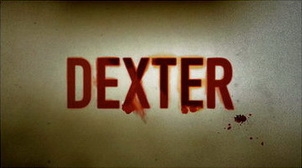
Showtime’s dark drama Dexter (don’t blame me for the alliteration – after all, the show is based on a book called “Darkly Dreaming Dexter”) is about a forensics expert who’s also a serial killer. But wait! He’s a moral serial killer who only kills bad guys, so he still qualifies to be the center of a whole television show.
I had heard this line explaining Dexter so many times from people saying the show was excellent over the last couple years, and frankly I was a bit turned off by this summary of the premise. A serial killer anti-hero seems like such a gimmick: we’ve seen anti-heroes abound in critically acclaimed television recently – think Dr. House, Tony Soprano, Malcolm Reynolds (from Firefly), and even Jack Bauer breaking all those laws. A gimmicky serial killer show doesn’t interest me much as a concept. Who needs another crime drama? And serial killers are so Other that they’re not that psychologically interesting to me, unlike those other anti-heroes.
But I finally caved – partly because Dexter is on Instant Watch on Netflix and mostly because my sister started watching it. My sister being intrigued by a show is a good indicator that I will be, too, whether I initially like to admit it or not (see, e.g., Firefly & Doctor Who). So I watched the first episode, and then the whole first season.
Dexter, as both a show and a character, troubles me. They trouble me so much that this is a snapshot from my computer camera as I watched the second episode:

This show certainly trades in its share of blood and gore, and those who like that part of crime shows (or, say, liked the Angel of Death scene in Silence of the Lambs) will be satiated. I, on the other hand, don’t particularly like it. I’m either creeped out, or – more likely – disappointingly unmoved by fake gore because I keep thinking, “Hmm, I wonder what the techs used to mix that blood.” The sneer of disgust in the above snapshot isn’t me being grossed out by a murder scene, actually. It’s me watching the credits and thinking about the show in general. And yet I watched it, because I kept clinging to the theory that this show is more than it seems. I still think so, even though I’m not totally convinced.
(By the way, I also don’t find the show that funny, as many people on Netflix say. Yes, the sister has her moments and Dexter has some pretty dry jokes, but this isn’t a dramedy or a macabre black comedy about a serial killer (which has been done to perfection in Keeping Mum, a delightful movie I highly recommend). It’s a cruel little show that keeps your attention with a weird twist on the anti-hero trope and a bunch of blood.)
On the one hand, Dexter as a main character seems like a clever ruse by an inept writer who was tired of hearing that his characters weren’t lifelike or human enough. Creating a “loveable monster,” which is how Dexter is billed on the books and the DVD blurb, seems an easy out. A guy who has no human emotion is supposed to be an unconvincing character, right? This is no offense to the author Jeff Linsday. I haven’t actually read the books so I don’t know if they’re any good. But it certainly seems like a cop out.
The show also seems to cop out with respect to the larger themes it engages. Other shows about unlikable characters grapple with mortality, morality, and religion by creating equally articulate but oppositely opinioned supporting characters (one of the reasons I like House so much). Dexter, on the other hand, just starts from the premise that some people deserve to die; the only grappling comes with the question, “Yeah, but does that mean it’s OK for a serial killer to kill them?”
By creating a non-human main character – less human even than anthropomorphized animals and aliens in other shows – Dexter is no longer a human we have to condone or condemn. Instead he becomes a symbol of rightful anger and bloody justice. He is an outlet for viewers, who believe in the death penalty in overwhelming numbers, who hear about killers going free on legal technicalities (and who may remember O.J. Simpson), who live vicariously through the righteous vengeance of television characters. But vengeance isn’t ours, even in made-up books and television, and I find myself extremely reluctant to relate to Dexter or “root” for him as so many fans claim to do. The show ultimately rests the likeability of its main characters in an assumption about the inner cruelty of the viewers, and this conceit is what disturbs me the most about the series. That the show is popular seems to indicate that many people agree with this conceit, which is what disturbs me the most about the viewers of this show.
On the other hand, maybe the show and its viewers are more nuanced than that. The plots and overall arc of the first season are compelling and downright good storytelling. The multi-episode arc involving another mysterious serial killer is good (and I don't want to spoil it), even if parts of it are pretty predictable (as in, I figured out who it was the first scene he/she was in, even though there was no positive identification for several more episodes.) The actors are good, too, and some of the side stories of intra-office politics are delightfully raw and nuanced. Many of the side characters inspire empathy as well, such as a painfully honest cop who is separated from his wife because he told her about the one time he cheated on her.
Better still, even though the show revolves around a character who describes himself as neither human nor monster, Dexter does become slightly more human throughout the first series, once the premise is firmly established that he’s not. This might be because it’s impossible to create an interesting character with no emotions, but I like to think that the show is trying to break down what we think it means to be human.
If you look at it this way, the show raises questions it never discusses. In a way, this is more skillful than the shows I love (like House) that hit you with a Big Issue 2x4 whenever an interesting ethical or philosophical tension arises. And the questions raised by Dexter are both important and complex: If we fake intimacy, is it still intimate? What are the limits of anti-Kantian ethics in terms of preventing harm to others? Do we feel more compassion for Dexter because he’s a foster child with hints at a horrible past, and if we do, why? Can we really mitigate the evil of serial killing by saying, “Oh, but you had a bad childhood”? And that raises the question of the whole premise: can we really mitigate the evil of serial killing by saying, “Oh, but you killed the bad guys, at least”? Why is Dexter the serial killer our hero, but Ice Truck Killer the serial killer our villain, when they are so clearly linked? Ultimately, how can we say someone is irreversibly good or bad? And what do we do about it if we can make such a determination?
That a television show can raise so many questions, especially about what it reveals about the people who watch and like the show and the main character, reveals some hidden mastery. I’d like to think so, at least. And so who am I to judge my fellow viewers who may be thinking on this level, too, rather than simply using Dexter as an outlet for bloody justice or merely blood?
So, even though I started with that grimace, I did end up entertained by some good storytelling and intrigued by some interesting questions. All in all, 3 stars.
23.3.09
Ghost Town

Most of the time, if I say the first twenty minutes of a film were the best, and it all went downhill from there, I mean that the movie was bad. Not so here. Ghost Town started at such a high point that downhill is still pretty good. The first twenty minutes are some of the funniest I have ever seen – somehow even the opening credits of dental equipment were funny to me. (Why are plaster teeth molds funny? Not sure, but they are.) Those first twenty minutes confirm for me that Ricky Gervais may be the funniest man alive. His plays a misanthropic dentist, who seems to like his profession because it means he can stuff people’s mouths with cotton when he’s tired of listening to them. Any introvert will cringe with recognition at his desire to avoid human contact to the point of being rude. (Really, who hasn’t let those elevator doors close so you don’t have to ride with someone?)
Basically, Gervais’s character, Bertram Pincus, can see dead people because he “dies” for seven minutes during a routine colonoscopy. His discovery of this ability, and the reason for it, are truly brilliant, and Kristen Wiig (of SNL) has never been as hilarious as she is playing the surgeon who operated on him. Greg Kinnear plays Frank Herlihy, one of these ghosts, and he somehow hits a perfect note of charming and sleazy. Frank claims to have unfinished business that consists of breaking up his widow’s impending marriage, and annoys Bertram until he agrees to help. Of course, in so doing, Bertram ends up falling in love with the wife (Tea Leoni).
Thus begins the second part of the story, which is slightly less funny than the first part. Pincus cracks jokes with the widow, and Gervais is a genuinely good joke teller. He’s funny, but it’s no longer as heartbreakingly hilarious. Misanthropic avoidance of people was better than cracking jokes about how funny Chinese names are.
The third and last part of the movie is the weakest, but it’s still satisfactory. In the end, you have to get rid of some of these ghosts, which means Bertram Pincus must eventually crack and be a passably good guy. While this isn’t necessarily a bad thing – I actually did want his character to grow, unlike Roger Ebert – the movie just folds and ties up loose ends. This leads to some saccharin moments, and the main “revelation” of the movie about the nature of ghosts isn’t actually that spectacular. But since we do hope for a happy ending, which is a hard note to hit in a story about dead people and misanthropes, the fact that it didn’t come off as totally unpalatable is pretty impressive.
But if you don’t like the sugary ending, and find yourself missing the brilliant acidity of Bertram Pincus before he had a change of heart, I suggest you do what I did: after watching, just go back and watch those first twenty minutes again.
6.1.09
The Band's Visit
 The Band's Visit begins with intertitles that say: "An Egyptian Police Band got lost in Israel overnight. . . . It was not very important." I'm not sure if this was an attempt to lower expectations, but it certainly did explain what this movie is about. It's a small movie. A microcosm that doesn't concern itself with the outside world. It's not about international politics, even though it could be given the mixture of Arabic and Hebrew and English that the movie contends with. It's not a grand love story or an action-packed spy story. And therein lies its beauty -- by not trying to do too much, the movie excels in what it does do.
There's not much more to the plot than that first sentence. It's about a group of Eygyptian policemen who end up in the middle of nowhere in Israel and have to spend the night because they can't get the next train until the morning. And there are no hotels, so they spend the night with a restaurant owner and her friends. Their lives change because of the night, but not too much, and they affect the lives of the Israeli townspeople they meet, but not too much.
This setup allows for some lovely character exploration, and the actors here are quite frankly amazing: normal, nuanced, full of pathos but not pathetic, and funny. In other words, they'd never make it in Hollywood (also, they're just not good looking enough). Basically all I want to do in this review is related different scenes -- how the very conservative, reserved leader of the police band spends the evening "out on the town" with a free-spirited and direct Israeli woman. Neither of them changes, and they don't become friends, but by the end of the movie he poignantly sees the other person as an opportunity missed -- someone who might have changed his life if only he had been a different person. Then there's the group of men who spend the night at the house of a young married man, and the men end up singing American jazz songs together. The youngest band member decides to hang out with a young Israeli man and helps him pick up a girl in what is my new favorite scene in any movie ever. It's just so funny without using any words. Trust me, it's worth seeing the whole movie just for that moment.
I'm at a loss to sum up the movie. I feel I can't really do it justice by describing it, so I will end with a paraphrase of a bit of dialogue that I think the writers meant to sum up the movie for themselves. One of the band members plays the clarinet, and starting composing a concerto but only has a few melancholic bars written. He plays them several times in the movie, but he says he never finished it because he didn't know how it ended and he got sidetracked by life. In this scene, he is sitting next to the crib of his host's baby. The band member sings the melody to the baby, and the host says, "Maybe this is how you concerto ends. Not with a symphonic crash and triumphant finish, but with with a baby in a crib in a simple room with no decorations on the walls." Sometimes the small bare film is more beautiful than the most ornate and complex movie one could come up with.
3.5 stars
22.6.08
Priceless
Another mini-review:
I came to this movie to watch Audrey Tatou, who I enjoyed so much in Amelie, and to relive Breakfast at Tiffany's, a brilliant and beautiful movie of which this is a loose adaptation. In the end, though, Ms. Tatou suffers from a script and direction that to some extent reduced her to a mannequin for all the expensive labels draped over her body. The best scenes are closeups of her, where she is actually allowed to act and remind of us her gamine quality rather than being forced to strut about in a manner very much like the women in Sex and the City. However, this movie still has wit and charm, and the minor characters are all perfect caricatures (especially the dog owners at the beginning of the movie). Most importantly, I absolutely fell in love with Gad Elmaleh, whose fumbling and awkwardness is subtle enough to reveal both charm and intelligence. I've read (but not yet seen) that he is even better in the Valet, but this was plenty good for me.
I came to this movie to watch Audrey Tatou, who I enjoyed so much in Amelie, and to relive Breakfast at Tiffany's, a brilliant and beautiful movie of which this is a loose adaptation. In the end, though, Ms. Tatou suffers from a script and direction that to some extent reduced her to a mannequin for all the expensive labels draped over her body. The best scenes are closeups of her, where she is actually allowed to act and remind of us her gamine quality rather than being forced to strut about in a manner very much like the women in Sex and the City. However, this movie still has wit and charm, and the minor characters are all perfect caricatures (especially the dog owners at the beginning of the movie). Most importantly, I absolutely fell in love with Gad Elmaleh, whose fumbling and awkwardness is subtle enough to reveal both charm and intelligence. I've read (but not yet seen) that he is even better in the Valet, but this was plenty good for me.
12.10.07
Palm Beach Story
Well, it's been forever since I posted, but I'm finally back into the swing of things and have actually seen a few movies recently, rather than just spending my time catching up on work and old episodes of House, M.D. This week, I actually managed to make it to a great movie theater, The Brattle Theater here in Cambridge. The Brattle doesn't play as many old movies as I'd like (although I'd highly recommend Evil Dead 2, playing on Halloween!) but it's a nice little indie place. And over the past few weeks, they've had a series that has made up for their usual lack of old movies. They even played a Buster Keaton film. And I got to see a Preston Sturges film that I'd never even heard of: The Palm Beach Story.
Basically, all you have to know about the plot is this: it's ridiculous and far-fetched. The characters are absurd, and some of them don't make any sense at all. And overall, the movie is excellent.
The movie begins with a married couple, Tom (Joel McCrea) and Gerry (Claudette Colbert), who love each other but have no money. Gerry decides to leave Tom to try to get them the money they need by capitalizing on her looks. And, if you grew up ever watching the cartoon cat and mouse namesakes of this pair, you can guess what happens next: Tom follows Gerry, and escapades abound. Gerry snags an extremely earnest and extremely rich man, and Tom accidentally gets snagged by the rich man's man-crazy sister. In the end, though, everyone settles down happily through some unabashedly stupid plot twists ("That's a whole other plot entirely" says Tom when a couple of twins pop into the story to save the day.)
In the grand tradition of screwball comedy, though, nothing needs to make sense, because everyone is having too much fun. There are some unexpected hilarious lines ("That's one of the tragedies of this life - that the men who are most in need of a beating up are always enormous."), and some similarly unexpectedly amusing (and amusingly-named) characters, like the Weinie King and the Ale and Quail Club, which is comprised of a bunch of rich millionaires who like to get drunk, sing, and hunt, no matter the circumstances. The only bad thing about this movie is that I've now had "A-Hunting We Will Go" in my head for the past couple days....
An incredibly fun 3 Stars.
6.6.07
The Pursuit of Happyness
 I watched The Pursuit of Happyness on an airplane from Newark to Heathrow this week, so it was probably not exactly the best experience to evaluate the movie, especially as it was on for about an hour before they stopped it (the entertainment had started because we were stuck on the plane for many hours before we actually took off). So I kind of watched the movie in two parts, which definitely breaks the flow of the narrative.
That being said, I think this was an excellent, if slightly trite, movie. It’s pretty much your powerful Hollywood drama, complete with a big star and a cute kid. In the movie, Will Smith plays a man struggling to get by in San Francisco in the year 1981. He’s a salesman of some obscure medical device, which basically means his job is to constantly be rejected as he tries to sell all the devices he invested in. Then his wife leaves him, leaving him a broke and single dad to his four-year-old son, Christopher, played by Will Smith's real-life son Jaden. (That casting certainly makes the father-son bond convincing, a huge benefit for a movie that's main danger is becoming too schmaltzy.)
Enter your favorite “overcome adversity” soundtrack. Will Smith’s character, named Chris Smith, is only a high school graduate, but he's also something of a math whiz. To prove this point, there’s a few fun scenes involving the “latest hot new toy” – a Rubik’s cube, which is one of the few things that solidly grounds the story to a date. So Smith applies to a stock brokerage internship to try to work his way out of his shoestring lifestyle.
Oh yes. It’s an unpaid internship. So, he has to be a single parent, a salesman of an unsaleable product, AND an intern in a highly competitive program. And pretty quickly, make that a homeless single parent.
If I have to worry about spoiling the plot for you, you haven’t paid enough attention. Did you notice that this is movie with Will Smith, the man who has saved us all from aliens multiple times? And that there’s a cute kid involved? Through all the hardship, all the juggling, all the immense pressure of trying to succeed, our hero finally does, and I was surprised to see how much I actually cared, given the fact that the outcome was never really in question.
My favorite part about this movie, though, isn’t the inspiring story, though that makes it worth the watch. What pushes this movie into the above average category is how unconventionally it gives the audience cues with which to understand and invest in the story. It does this in two ways. First, the first-person narration, which some might consider a crutch, is actually used quite effectively here by providing short comic relief or philosophic consideration, so necessary for making a drama not seem too didactic, without actually having to break the story. The narration also helps keep the audience aware of when the story is about to turn; every once in a while, Smith narrates the beginning of a scene saying, “This part of my life is called Being Stupid,” or “This part of my life is called Running.”
Second, the obscure medical device (a bone density scanner or something like that) also really helps the narrative. At first, I thought it to be just a strange and slightly annoying way of making Chris Smith unemployed but unable to get unemployment checks. But each device is very expensive, and so each one, and its sale, represents a significant if unreliable economic buoy for Smith and his son. About two-thirds of the way through the movie, the mere image of the nondescript off-white, sewing-machine-sized device had become a visual representation of the elusive monetary security that drives the whole movie. Very cool to use something that initially seems pointless and boring to the advantage of the story. (If I were still in college, and a film major, I would definitely write a paper about what that device achieves in the movie.)
All in all, if you want a quality uplifting drama, of which there seems to be very few these days, this is definitely worth a look. 3.5 stars.
26.11.06
Stranger Than Fiction
People who know me best know that I've never grown out of the "What Do I Want To Be When I Grow Up?" stage of childhood. And, like the stereotypical child, I often change my mind based on what new and fun encounter I've had. In the past year and a half, I've wanted to be the following: an architect, a professor, a writer, a missionary, a third-world developer (specifically in public health), an entrepreneur, a cinematographer, a journalist, a pastry chef, and a Lego enthusiast (OK, maybe that last thing doesn't count as a job, but it certainly seems to take up a lot of time). And, of course, a lawyer. Some of those I can probably be at once (like, lawyer + writer + professor), but some are harder to fit together.
Basically, though, the common thread of all of these things is that something sparks my imagination. My father used to always have to remind my big sister that imitation was a form of flattery whenever I copied my big sister in what she did when we were little. But I still have the same tendency, and it *is* perhaps the highest praise I can give to something to say that I left wanting to do that thing for a living.
With that preface, I came out of the movie Stranger Than Fiction this weekend and wanted to be a novelist. When I come out of incredible plays, I want to be a director or actress. When I come out of exceptional movies, I want to writer screenplays or be a film editor. Stranger Than Fiction had neither of these effects on me, because in fact it wasn't an exceptional movie. It had a lot of flaws: an inability to commit (the cardinal sin of dramatic arts), and in general an intellectual feel that never quite expanded beyond the cerebral, and an aesthetic that was sometimes confusing. There were lots of wonderful details in the movie that were almost hidden - the quote around a bakery store's exterior, a throwaway background quote about the novelist's religious beliefs, fleeting visual references to books and authors throughout. If you do go see the movie, try to keep alert for these things, even as you get bombarded with silly animations of maps and calculations.
But at the same time, the movie *did* inspire me. Its premise is quite smart and intriguing. Artists create worlds and characters in order to manipulate them into something beautiful - but what if that beauty were actually destructive? It doesn't matter when they are just bits of printed words on paper, but as most artists and writers know, they often seem more separate from one's own creation. In a word, they seem more real. And so, what do you do then? Sacrifce them to the story and the beatury of Art, or do we recognize a purpose of Art other than to illuminate its own beauty? All these thoughts and more poured out of my head as I left the theater, feeling a little empty by the wishy-washy ending of the movie. The movie is about a novelist (or perhaps, more acurately, a tragedian), played by Emma Thompson, and the hero of her new novel who is, inexplicably, real. But - and here is the catch- the hero finds out that he is a character destined to die when he begins to hear the narration of the story in his head. So now he has to figure out what is going to happen to him, and if and how he can save his own life. Throw in a little romantic sideplot with Maggie Gyllenhaal (who is, by the way, delightful as a Harvard Law School student drop-out turned baker. yay!), and you've got pretty much all the important plot points down. Will Ferrell, as the bland anti-hero Harold Crick, seems a bit awkward containing his manic persona to play such a subdued and insecure character, but he does quite well. And we know there is more life bursting to get out from underneath his monotone and bewildered expression, which is important to win over the audience and make us care about his fate. Dustin Hoffman, as the literature professor Harold seeks out for guidance, has apparently perfected the likable but callous (and somewhat phoned-in) performance. See I [Heart] Huckabees and, (oh horror) Meet the Fockers for examples.
The film's biggest problem, however, is the same as Emma Thompson's character's: the ending. How do you end a film about a book character who is real? Unfortunately, you've only got two choices: tragedy and comedy. In the first you kill off Harold Crick, as Emma Thompson's character originally intended. And really, what movie with Will Ferrell as the main character is going to end with such a dramatic and terrible note? In the second, though, you destroy all the build-up of the movie, and end up with a bland cop-out. Or at least, it feels like a cop-out if you can't explain why it makes more sense - for the *story* - for Harold Crick to live. At the end of the day, this movie *is* fiction, and just saying, "oh, you shouldn't kill people" doesn't seem like enough. The script in Stranger Than Fiction makes some half-hearted and cursory attempts to explain a decision of comedy over tragedy, but they aren't explained well or even taken very seriously. Which leaves the film somewhat abrupt in its ending, with me sitting through the credits trying to figure out if there was a better ending out there than the one the film seemingly painted its way into.
All the film's weakness, though, I forgive, not because I think the movie is great, or even necessarily one that i would recommend to any movie goer (think: if you liked I [Heart] Huckabees, you'll probably like this, too). But I forgive the weaknesses of Stranger Than Fiction because I came out of that movie theater with a heightened awareness of the world around me and its beauty, and also a renewed conviction that I wanted to write about it. I came home and sat down in front of my computer and opened up an old story I started about a year ago and started working on it some more. Some new characters came out onto the page, ones I didn't know and didn't expect to meet. But I like them, these new characters of mine. And now, with Strange Than Fiction in the back of my head, I hope they survive the story.
Subscribe to:
Posts (Atom)